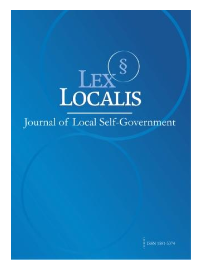
EXPLORING THE POTENTIAL AND USE CASES OF BLOCKCHAIN TECHNOLOGY IN COLOMBIAN EVIDENTIARY LAW: CHALLENGES AND OPPORTUNITIES
DOI:
https://doi.org/10.52152/80689p87Keywords:
Blockchain, Evidentiary Law, use cases, evidence, authenticity, Means of proof, Intellectual Property, Insurtech, Notarial Law.Abstract
Blockchain technology has been presented as a revolutionary tool with enormous potential to change justice systems, especially when it comes to the right to evidence. Their capacity to guarantee integrity, completeness, authenticity, and traceability of data creates new possibilities for enhancing trust and efficacy in judicial processes. This paper examines the primary applications of blockchain technology within the Colombian evidence system, which are classified into three approaches: The use of blockchain in legal proceedings encompasses two primary applications: (i) the substantiation of factual claims, and (ii) the preservation of evidence through the implementation of unalterable records and timestamps that are subject to verification. Beyond its role within the judicial context, blockchain has a significant function in the realm of document creation and validation. This application extends to domains such as intellectual property and notarial law. Employing a qualitative approach and a document analysis grounded in legal, technological, and comparative literature, the benefits, limitations, and technical and legal challenges related to its adoption are examined. The findings indicate that blockchain has the potential to function as an effective instrument for enhancing legal certainty, transparency, and the validity of evidence in Colombia, provided that it is employed in conjunction with regulatory modifications, institutional training, and technical standards that are interoperable and designed to facilitate its integration into the prevailing judicial system.
Downloads
Published
Issue
Section
License
Copyright (c) 2025 Lex localis - Journal of Local Self-Government

This work is licensed under a Creative Commons Attribution-NonCommercial-NoDerivatives 4.0 International License.